The Kodak 35mm Slide & Film Viewer is a straightforward way to bring small slides and film negatives into view with a backlit screen and built-in magnification.
This Kodak 35mm Slide & Film Viewer review looks at its simple viewing workflow, portability, and the limits to consider if you need more than casual inspection.
Kodak Slide Viewer Review Summary
The quick verdict
3,000+ ratings
Read Amazon ReviewsKodak 35mm Slide & Film Viewer
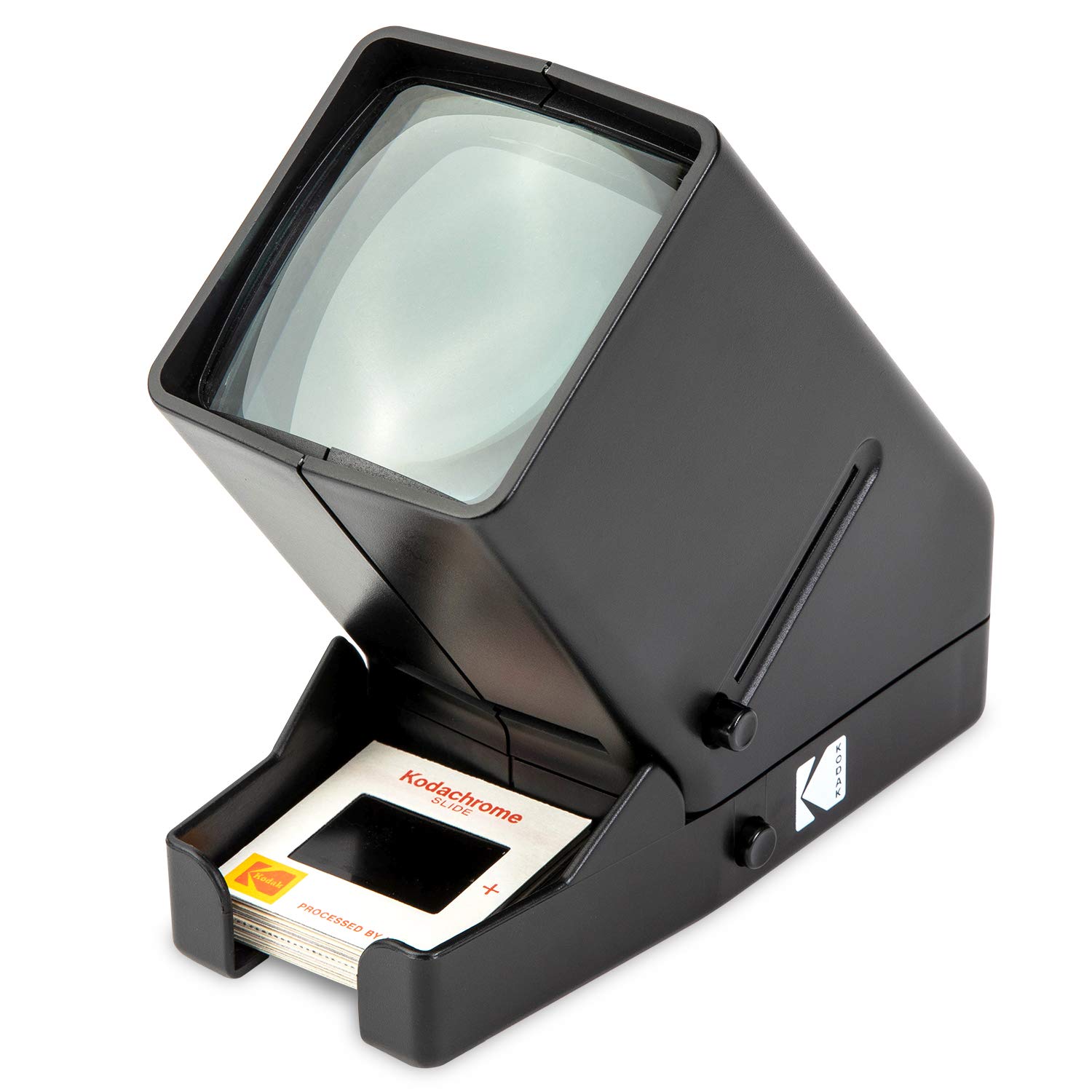
A portable, battery-operated viewer for people who want to inspect 35mm slides and film negatives without setting up a projector.
- Designed for 35mm slides and film negatives, with a dedicated slide slot and a separate film input.
- Built-in 3× magnification enlarges the viewed image.
- A large viewing area is lit by daylight LED illumination.
- A quick-eject button helps remove a slide before loading another.

Pros
- Combines illumination and magnification in a compact handheld viewing approach.
- Accepts both 35mm slides and film negatives.
Consider before buying
- The 3× magnification and viewing area are intended for inspection, not room-scale presentation.
- The DC cable is sold separately, so check what power accessories you need before choosing how to use it.
Read the full review summary
This handheld viewer combines a dedicated slide slot, a film input, a quick-eject button, LED illumination, and 3× magnification.
That makes it appealing for someone sorting family archives or revisiting a few frames at a time, especially when a full projector setup would be inconvenient.
Its focus is direct viewing rather than digitizing or presenting images to a group. Battery operation supports portable use, while DC operation is also possible with a separately sold cable.
Buyers should consider whether the viewing format and magnification suit their images and whether they need a way to save or share digital copies.
The buying factors
Kodak Slide Viewer Scorecard
Editorial scores reflect listed features and buyer fit; they are not laboratory measurements or customer ratings.
Ease of viewing
A dedicated slot and film input, plus a quick-eject button, support a simple load-and-look routine.
Image visibility
A large viewing area, LED backlight, and 3× magnifier are useful aids for inspecting small frames.
Portability
Battery operation is designed to let you view slides away from a fixed power setup.
Format flexibility
It accepts 35mm slides and film negatives, covering two common archive formats but no others are specified.
Power flexibility
Battery use and optional DC power offer a choice, though the DC cable is sold separately.
Group presentation
The handheld viewing design is geared toward looking at frames individually rather than projecting them for a group.
Key Features and Specifications of Kodak Slide Viewer
- Designed for 35mm slides and film negatives, with a dedicated slide slot and a separate film input.
- Built-in 3× magnification enlarges the viewed image.
- A large viewing area is lit by daylight LED illumination.
- A quick-eject button helps remove a slide before loading another.
- Battery operation supports viewing away from a power outlet.
- DC power is also possible with a separately sold cable.
Pros and Cons of Kodak Slide Viewer
Pros
- Combines illumination and magnification in a compact handheld viewing approach.
- Accepts both 35mm slides and film negatives.
- A dedicated input and quick-eject button make it suited to reviewing frames one by one.
- Battery operation is useful when you want to browse images away from a fixed setup.
Consider before buying
- The 3× magnification and viewing area are intended for inspection, not room-scale presentation.
- The DC cable is sold separately, so check what power accessories you need before choosing how to use it.
- The described design provides a viewing experience; buyers who need digital files will need a separate digitizing solution.
Who Should Buy Kodak Slide Viewer?
Good fit
Consider this viewer if you have a collection of 35mm slides or negatives and want a simple way to look through them without assembling a projector setup.
Its built-in light and magnifier are practical for checking individual frames, while the slide slot and film input give the routine a clear, direct feel.
It may be particularly convenient for occasional family-history browsing, selecting frames to scan later, or sharing a close look with one person at a time.
Battery operation gives you flexibility over where to use it; if you prefer DC power, confirm that the separately sold cable is available and compatible with your intended setup.
Who should skip it
Skip this style if your main goal is to project images across a room for a group.
The handheld viewing format is built around looking into the viewer, so consider a projection solution if shared, larger-scale viewing matters most.
Also look elsewhere if you need the viewer itself to create, store, or transfer digital image files.
The described features cover illuminated viewing, not digitization; check for a separate scanning workflow if archiving or sharing files is your priority.
How the Kodak Slide Viewer Fits a 35mm Archive
A direct way to browse frames
The dedicated slide slot and film input keep the basic process simple: place a frame for viewing, inspect it, then use the quick-eject button to move on.
That approach fits sorting and casual revisiting better than a setup intended for a formal slideshow. If you expect to work through a large collection, consider how comfortable it will be to handle frames one at a time.
Light and magnification for inspection
The LED-lit viewing area and 3× magnifier address the central challenge of examining small originals: making the image easier to see without a separate light box and loupe.
They can help with general viewing and frame selection, but they do not establish how every original will look.
If fine detail or color judgment is critical, check a representative slide or negative before relying on this as your only inspection method.
Portable use and power choice
Battery operation makes the viewer easier to place wherever you are sorting or sharing a small group of images.
The option for DC power can suit a stationary table or longer viewing session, but the cable is sold separately. Decide which power mode matches your routine and account for the accessory if you plan to use DC.
Viewing versus preserving
This product is centered on seeing the original image through an illuminated, magnified window.
That is useful for revisiting a collection or deciding which frames deserve further attention, while creating durable digital copies calls for a separate scanning process.
Treat the viewer as a browsing tool if preservation and file sharing are also part of your project.
Alternatives to Kodak Slide Viewer
No alternative model is recommended here. Compare the viewing format, power arrangement, and digitizing needs that matter to your routine before choosing another option.
Is Kodak Slide Viewer Worth It?
The Kodak 35mm Slide & Film Viewer is worth considering for straightforward, portable viewing of 35mm slides and film negatives.
Its built-in illumination, 3× magnification, and frame-by-frame controls make it a practical way to revisit or sort an archive.
Choose it if individual viewing is enough and battery operation suits your routine. If you need group projection or digital copies, plan on a different tool for that part of the job.
Your review at a glance
3,000+ ratings
Read Amazon ReviewsKodak 35mm Slide & Film Viewer
A portable, battery-operated viewer for people who want to inspect 35mm slides and film negatives without setting up a projector.
- Designed for 35mm slides and film negatives, with a dedicated slide slot and a separate film input.
- Built-in 3× magnification enlarges the viewed image.
- A large viewing area is lit by daylight LED illumination.
- A quick-eject button helps remove a slide before loading another.